
Buxa Tiger Reserve and Valmiki Tiger Reserve
Context: A three-year-old tigress, T138, was translocated from Valmiki Tiger Reserve in Bihar to Buxa Tiger Reserve in West Bengal to help establish a viable, self-sustaining tiger population
Key Points
1. Buxa Tiger Reserve
- Location: Alipurduar district, northern West Bengal, in the Eastern Himalayan foothills.
- Status: Declared a Tiger Reserve in 1983.
- Significance: Forms part of the Terai–Duar savanna and foothill forest landscape, supporting rich biodiversity.
- Conservation challenge: Habitat degradation and fragmentation, land-use changes and declining prey availability contributed to the prolonged absence of a stable resident tiger population.
- Current initiative: Tigress T138 is being monitored through telemetry, camera traps and field observations to assess her movement, health, behaviour and adaptation.
2. Valmiki Tiger Reserve
- Location: West Champaran district, north-western Bihar, along the India–Nepal border.
- Status: Bihar’s only tiger reserve. It forms part of the Terai–Arc landscape and is contiguous with Nepal’s Chitwan National Park.
- Landscape: Located in the Himalayan foothills, with Shivalik hills, Terai–Bhabar forests and river systems, including the Gandak.
- Significance: Provides habitat for Bengal tigers and other wildlife, including the one-horned rhinoceros.

Dig deeper: Revise the Tiger reserves in India. Focus on First and Latest majorly. Then from your state all reserves.
Sickle Cell Anaemia
Context: Scientists at the CSIR–Centre for Cellular and Molecular Biology (CCMB), Hyderabad, developed an India-specific severity assessment tool using clinical data from Indian children.
Key Points
What is Sickle Cell Anaemia (SCA)?
- Definition: An inherited blood disorder caused by a mutation in the HBB (beta-globin) gene, which leads to the production of abnormal haemoglobin called haemoglobin S (HbS).
- How it affects the body: Red blood cells become rigid and sickle-shaped, making it harder for them to flow through small blood vessels. These cells also break down earlier than normal, causing anaemia.
- What is anaemia? A condition in which the blood has insufficient healthy red blood cells or haemoglobin to carry adequate oxygen to body tissues.
- Major effects: Chronic anaemia, severe pain episodes, infections and possible damage to organs such as the kidneys, lungs and brain.
Name of the New Assessment Tool : India-Specific Severity Score
The tool is a disease severity scoring system, not a diagnostic test for detecting sickle cell anaemia.
Model | Full name | Purpose |
ISS1 | Indian Severity Score 1 | Uses clinical indicators and laboratory measurements to classify disease severity. |
ISS2 | Indian Severity Score 2 | Uses clinical indicators without requiring the same biochemical measurements. |
Remember: Tests such as haemoglobin analysis are used to diagnose sickle cell disease; ISS1 and ISS2 help assess how severely the disease affects a patient.
Dig deeper: What is Thalassemia?
Places in Ladakh
Context: The Government of India, in consultation with the Ladakh Union Territory administration, has standardised the names of 28 geographical features and places in Ladakh on official Survey of India (SoI) maps.
Key Points
The objective is to ensure accurate identification and increase public awareness. The move follows similar naming measures in Arunachal Pradesh amid Chinese cartographic claims.
Categories of the 28 Geographical Features
Category | Number | Names |
Peaks | 11 | Atisha Giri, Kanishka Peak, Martand Giri, Zorawar Peak, Rinchen Zangpo, Sakyasri Giri, Marpa Lotsava Ri, Milarepa Kangri, Shiva Ri, Maheshvara Ri, Karun Pir |
Mountains | 5 | Karun Pir, Drak Karpo, Jolmori and other names listed in the official notification |
Land areas | 6 | Brangsa, Kuksel, Dehra Compass, Gogra, Kumarayana Point, Panglung, Shamal Lungpa |
Glaciers | 2 | Parpik Glacier, Skamri Glacier |
Passes | 2 | Chapchingal Pass, Shachmirk Pass |
Valley | 1 | Shkorga Valley |
River | 1 | Yangpa River |
Lake | 1 | Guru Rinpoche |
Other water body | 1 | Hot Spring |
Dig deeper: Where are passes lipulekh, Bomdi La, Khardung la, Jelep la located?
Great Indian Bustard (GIB)
Context: For the first time, two captive-bred male Great Indian Bustard chicks, aged 4–6 months, are likely to be released into enclosures in Desert National Park (DNP), Jaisalmer, Rajasthan, as part of Project GIB’s conservation breeding programme.
Key Points
Great Indian Bustard: Key Facts
- Scientific name: Ardeotis nigriceps.
- IUCN status: Critically Endangered.
- Habitat: Arid and semi-arid grasslands and open landscapes.
- Distribution: Primarily Rajasthan, with a few individuals in Gujarat, Maharashtra and Karnataka.
- Population: Latest estimates cited in the report place the wild population at around 120–150 birds, including approximately 130 (±20) in Rajasthan.
- Threats: Habitat loss, poaching, predation of eggs and chicks, and collisions with power lines associated with renewable energy infrastructure.
- Reproduction: Slow breeding rate; generally lays eggs once every one to two years.
Conservation Measures
- Project GIB: The Wildlife Institute of India (WII), with forest departments, has bred and raised at least 98 bustards in captivity at centres in Sam and Ramdevra, Jaisalmer.
- Pilot release: The post-monsoon period provides abundant insects in grasslands for feeding the chicks. Predation and adaptation to the wild remain major challenges.
- Jumpstart method: Infertile eggs laid by wild females in Kutch, Gujarat, are replaced with viable eggs from Rajasthan’s captive-breeding programme.
- Power-line protection: The Supreme Court has directed that specified power lines in areas outside Desert National Park be buried underground by December 2027.
Dig deeper: What was the SC verdict in M.K. Ranjitsinh vs Union Of India on 21 March, 2024?
Ancient Indian Ports and Maritime Trade
Context: Archaeologists exploring the seabed around Poompuhar (ancient Kaveripoompattinam), off the Tamil Nadu coast, recovered pottery fragments, including parts of a torpedo jar believed to have originated in West Asia.
Key Points
Poompuhar was an important ancient Chola port, parts of which are now submerged beneath the Bay of Bengal.
Major Ancient Ports of India
Ancient port | Present location | Kingdom/ region | Historical significance |
Poompuhar (Kaveripoompattinam) | Tamil Nadu, Bay of Bengal coast | Chola | Important Sangam-era port and Chola capital. Underwater exploration has identified submerged structures; recent pottery finds suggest long-distance maritime connections. |
Muziris (Muchiri) | Kodungallur–Pattanam region, Kerala | Chera | Major port for Indo-Roman trade, especially pepper and other spices; archaeological finds include Roman amphorae and West Asian pottery. |
Korkai | Near the Tamiraparani estuary, Tamil Nadu | Pandya | Ancient port associated with pearl fishing and the maritime economy of the Pandya region. |
Arikamedu | Near Puducherry, east coast | Ancient Tamil region | Archaeological site known for Roman-related artefacts, imported pottery and evidence of overseas trade. |
Tamralipti | Present-day Tamluk, West Bengal | Eastern India | Important port connecting the Gangetic region with maritime routes to Sri Lanka and Southeast Asia. |
Bharuch (Barygaza) | Gujarat, on the Narmada estuary | Western India | Major west-coast trading port linked to Roman and West Asian commerce; described in the Periplus of the Erythraean Sea. |
Sopara (Shurparaka) | Nala Sopara, Maharashtra | Western India | Ancient port involved in Indian Ocean trade; associated with Buddhist remains and links to western maritime routes. |
Lothal | Gujarat, near the Gulf of Khambhat | Indus Valley Civilisation | Harappan urban and trading centre, famous for a structure interpreted by many archaeologists as a dockyard; evidence of trade with Mesopotamia. |

Dig deeper: What is Yavana, yavanpriya ?
How Medicines Are Priced in India
Context: The Supreme Court is hearing petitions challenging medicine pricing in India after concerns arose over large differences between the price at which medicines are supplied to retailers and their maximum retail price (MRP).
Key Points
How Medicines Are Priced in India
- Legal framework: The Essential Commodities Act, 1955, empowers the Central Government to regulate the prices of essential commodities, including medicines.
- Drug Price Control Order (DPCO): Provides the framework for controlling medicine prices and empowers the government to fix ceiling prices for specified medicines.
- National Pharmaceutical Pricing Authority (NPPA): Established in 1997 under the Department of Pharmaceuticals. It fixes and revises prices, monitors overcharging and enforces the DPCO.
Scheduled vs Non-Scheduled Medicines
Feature | Scheduled medicines | Non-scheduled medicines |
Basis | Included in Schedule I of the DPCO, based on the National List of Essential Medicines (NLEM). | Not included in Schedule I. |
Price regulation | Government fixes a ceiling price. | No general ceiling price; manufacturers set the initial MRP. |
Price increases | Ceiling prices are revised annually based on the Wholesale Price Index (WPI). | MRP cannot be increased by more than 10% within 12 months under the DPCO. |
How Is the Ceiling Price Calculated?
- The NPPA considers the price to retailer (PTR) of qualifying brands and generic versions of the same medicine formulation.
- Versions with less than 1% market share are excluded from the calculation.
- The average PTR of the qualifying versions is calculated, and a 16% retailer margin is added to determine the ceiling price.
- Manufacturers cannot sell scheduled medicines above the prescribed ceiling price, subject to applicable taxes.
Key Issues Raised in the Petitions
- Unregulated initial prices: Manufacturers can set the initial MRP of non-scheduled medicines without a general price ceiling.
- High supply-chain markups: Alleged large differences between manufacturer or retailer prices and prices charged to patients, including in hospitals.
- Generic medicines: Petitions seek greater use of generic prescriptions, which may reduce patients’ expenditure.
- Right to health: Petitioners argue that stronger regulation is needed to make essential medicines affordable under Article 21 of the Constitution.
Dig deeper: What are Magic remedies under the DPCO act?
News in Short
Suspension of Operations (SoO) Pact
- Signed in: 2008, between the Union Home Ministry, Manipur government, and two Kuki-Zo insurgent group coalitions: the United Peoples’ Front (UPF) and the Kuki National Organisation (KNO).
- Purpose: To suspend armed operations and facilitate peace negotiations with Kuki-Zo insurgent groups demanding a separate homeland.
- Nature: A tripartite agreement whose terms and ground rules have been periodically renewed.
- Current status (as reported): The agreement expired on 4 September 2026 and has not been extended; officials say it will remain in abeyance until the Kuki-Zo groups surrender all weapons.
- Key condition: The pact provides a framework for suspending armed operations, with monitoring of designated camps and weapons.
Asian Games: Indian Women’s Hockey
- Gold medal: India defeated defending champions China 1–0 in the final, ending a 44-year wait for Asian Games gold in women’s hockey.
- Olympic qualification: The victory secured India’s qualification for the 2028 Los Angeles Olympics.

India's First Plastic-free Oil Terminal
- First plastic-free oil terminal: Mumbai Port Authority declared Jawahar Dweep Marine Oil Terminal plastic-free on 2 October 2026 during Swachhata Abhiyan 2026.
- Objective: Reduce single-use plastic and promote sustainable waste management across port facilities, docks and coastal areas.
Dnipro River Kyiv
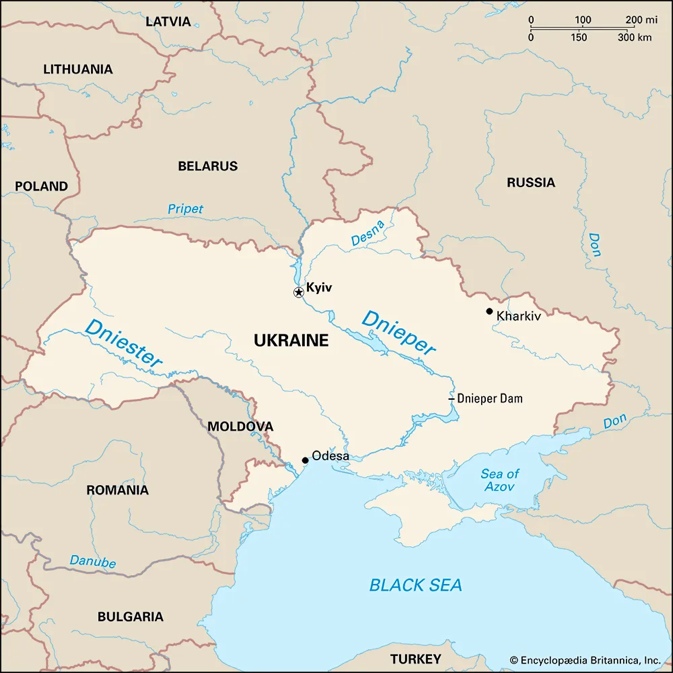
- Russian drone strikes targeted bridges across the Dnipro River in Kyiv, Ukraine, disrupting traffic and forcing partial suspensions of movement.
- About Dnipro River
- Alternative names: Dnipro (Ukrainian) and Dnieper (English); Dnepr is the Russian name.
- Origin: Valdai Hills in western Russia.
- Countries traversed: Russia, Belarus and Ukraine.
- Length: Approximately 2,200 km; one of Europe’s major rivers.
- Mouth: Flows into the Black Sea through an estuary in southern Ukraine.
- Importance: A major source of water, hydroelectric power and transport; it flows through Kyiv and other important Ukrainian cities. Bridges across it are vital for urban connectivity and movement.

Done with this article? Mark it so you can track your revision on the blog page.