
Gandak River
Context: Heavy rainfall in Nepal’s catchment increased Gandak discharge, breaching embankments and flooding low-lying areas of Bihar’s border districts.
Key Points
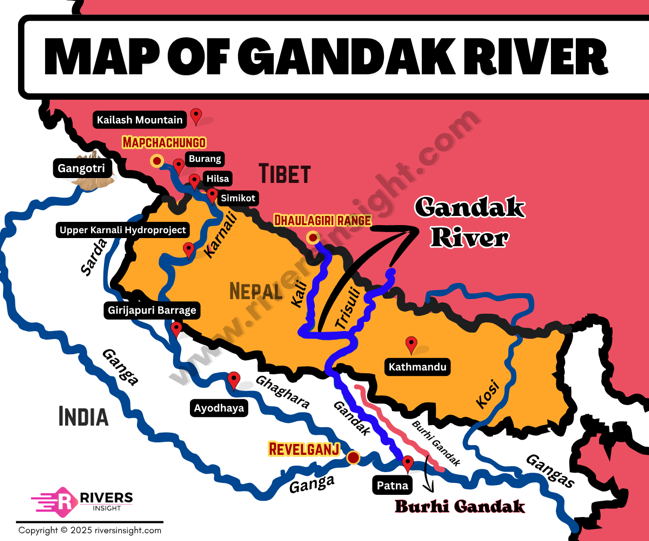
- Gandak is a major transboundary Himalayan river flowing through Nepal and India.
- In Nepal, it is known as the Narayani River.
- It originates in the Himalayas of Nepal/Tibet region and enters India through Bihar.
- It flows through Bihar and Uttar Pradesh before joining the Ganga near Patna.
- Valmikinagar Barrage in West Champaran is an important irrigation and flood-management structure on the Gandak.
- The river is prone to flooding in Bihar, particularly during the monsoon due to heavy rainfall in its Himalayan catchment and high upstream discharge.
- The Gandak is an important source of irrigation and water supply in northern Bihar.
- Major tributaries include the Kali Gandaki


Dig deeper: How has the Himalayan River system evolved? What was original course of Brahmaputra river? What is Delhi Ridge?
India - European Free Trade Association (EFTA)
Context: The India–EFTA Trade and Economic Partnership Agreement (TEPA) entered into force on 1 October 2025.
Key Points
European Free Trade Association (EFTA)
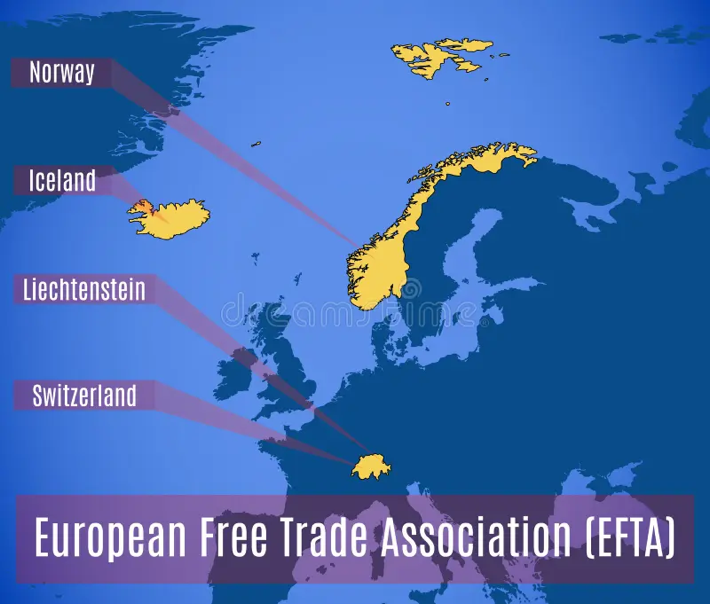
- EFTA is a European intergovernmental organisation promoting free trade and economic integration among its members.
- It has four members: Iceland, Liechtenstein, Norway and Switzerland.
- EFTA is separate from the European Union (EU).
- EFTA members are developed European economies with strengths in areas such as technology, finance, energy, fisheries and advanced manufacturing.
About India–EFTA TEPA
- Effective: 1 October 2025.
- EFTA tariff concessions: 92.2% of tariff lines, covering 99.6% of the value of India’s exports to EFTA.
- India’s concessions: 82.7% of tariff lines, covering 95.3% of the value of EFTA exports to India.
- It is described as India’s first trade agreement with a dedicated chapter on investment and job creation.
- EFTA states aim to increase investment in India by US$100 billion over 15 years.
- The agreement aims to facilitate 1 million direct jobs in India.
- The partnership goes beyond tariff reduction to promote investment, technology transfer and industrial partnerships.
- Iceland: Potential cooperation in geothermal energy, carbon capture and storage, fisheries and Arctic research.
- Geothermal cooperation: Icelandic experience in direct use of geothermal heat is relevant to India’s Himalayan geothermal belt.
- Carbon capture: Iceland’s CarbFix technology demonstrates permanent mineral storage of captured carbon dioxide in basalt.
- Ocean economy: Iceland offers expertise in sustainable fisheries, seafood processing, cold chains and utilisation of fish waste.
- Arctic cooperation: Iceland is an Arctic State, while India has been an Arctic Council Observer since 2013and operates the Himadri research station in Svalbard.
Dig deeper: Which are Nordic nations?
CAFE-III: New Fuel-Efficiency Norms for Cars
Context: CAFE-III norms were notified on September 29, 2026 and will apply from April 1, 2027 to March 31, 2032.
Key Points
Fleet-wide fuel efficiency
- CAFE (Corporate Average Fuel Economy) norms regulate the average fuel consumption and CO₂ emissions of a manufacturer’s passenger-vehicle fleet.
- They apply to M1-category passenger vehicles manufactured or imported for sale in India.
- The target depends on the weighted average unladen weight of the manufacturer’s fleet.
- Reference weight is 1,229 kg: heavier fleets get a higher permitted fuel-consumption limit, while lighter fleets face a lower limit.
- The standards become progressively stricter from FY 2027-28 to FY 2031-32.
Small cars
- An earlier proposal offered a separate 3 g/km benefit for petrol cars weighing up to 909 kg.
- The final rules remove this separate concession.
- However, weight remains important because the fleet’s average weight determines the applicable fuel-consumption target.
EVs get the biggest compliance benefit
- Battery Electric Vehicles (BEVs) and Range-Extended Electric Vehicles (REEVs) receive a volume derogation factor of 3.
- Thus, one such vehicle effectively counts as three vehicles in the relevant fleet calculation.
- The factor is 2.5 for plug-in hybrids and strong hybrids running on flex fuel, 1.6 for strong hybrids and 1.1 for flex-fuel vehicles.
- EV consumption is measured in kWh/100 km and converted into a petrol-equivalent figure.
Alternative fuels
- The rules introduce a Carbon Neutrality Factor (CNF) to recognise renewable and low-carbon fuels.
- They recognise ethanol-blended petrol, biofuels and Compressed Biogas (CBG) as additional pathways for improving fleet-level CAFE performance.
- E20-and-above petrol gets an 8% factor, while flex-fuel ethanol vehicles get a 22.3% factor.
Compliance through credits
- Manufacturers performing better than their target earn credits, while those performing worse accumulate debits.
- Credits can be carried forward within a compliance block and traded between manufacturers.
- Manufacturers with a deficit can also buy credits from the Bureau of Energy Efficiency (BEE).
- The buyout price rises from ₹2,500 per g CO₂/km in FY2027-28 to ₹4,500 per g CO₂/km in FY2031-32.
Technologies recognised for efficiency gains
- CAFE-III recognises technologies such as start-stop systems, tyre-pressure monitoring, regenerative braking, efficient transmissions, motor-generators, LED lighting, advanced glazing, electric water pumps and efficient air-conditioning.
- Each qualifying technology can provide a claimed reduction of 1 g CO₂/km, subject to an overall 9 g CO₂/km cap.
- Self-declaration is allowed in the first compliance block; the second block requires validated testing.
Small manufacturers
- Manufacturers producing or importing fewer than 1,000 eligible vehicles in a reporting period are exempt from the specific CAFE target.
- They must still report their actual fleet-average fuel consumption.
Dig deeper: What is Bharat Standards BS VI ?
Union Public Service Commission (UPSC) — 100 Years
Context: The Union Public Service Commission (UPSC) completes 100 years on 1 October 2026; its institutional journey began with the first Public Service Commission established on 1 October 1926.
Key Points
Evolution
- 1855: Indian Civil Service examination introduced in London based on open competition, replacing nomination.
- 1863: Satyendranath Tagore became the first Indian to clear the Indian Civil Service examination.
- 1919: Government of India Act provided for a Public Service Commission.
- 1922: Indian Civil Service examination held in India for the first time at Allahabad.
- 1924: Lee Commission recommended establishment of a statutory Public Service Commission.
- 1926: Public Service Commission established under the Public Service Commission (Functions) Rules, 1926; Sir Ross Barker became its first Chairman.
- 1937: Renamed the Federal Public Service Commission.
- 1947: H.K. Kripalani became the first Indian Chairman.
- 1950: Federal Public Service Commission became the Union Public Service Commission under the Constitution.
Constitutional Status
- UPSC is an independent constitutional body under Part XIV, Articles 315–323.
- Article 315: Provides for Union and State Public Service Commissions.
- Article 316: Chairman and Members appointed by the President.
- Article 317: Removal/suspension of Members under specified constitutional safeguards.
- Article 320: Conducts examinations and advises on recruitment, promotions and disciplinary matters.
- Article 322: Expenses charged on the Consolidated Fund of India.
- Article 323: Annual report submitted to the President and placed before Parliament.
Major Functions
- Conducts examinations including Civil Services, Indian Forest Service, Engineering Services, Combined Medical Services, National Defence Academy & Naval Academy, Combined Defence Services and Central Armed Police Forces (Assistant Commandants).
- Conducts recruitment through interviews and recruitment tests for specialist posts.
- Advises Government on Recruitment Rules, promotions, induction into All India Services and disciplinary matters.
- Since 2012–13, empanels senior Indian Police Service officers for appointment as Director General of Police/Head of Police Force in States.
Important Modern Reforms
- 1979: Three-stage Civil Services Examination—Preliminary, Main and Interview—introduced.
- 1993: Essay paper introduced in Civil Services (Main) Examination.
- 2011: Civil Services Aptitude Test introduced.
- 2013: Civil Services (Main) restructured into four General Studies papers, including Ethics, Integrity and Aptitude.
- 2021: Women admitted to the National Defence Academy & Naval Academy Examination for the first time.
Dig deeper: Who appoints chairman of JPSC? And who removes?
UN Sea-Level Declaration
Context: UN Declaration to recognise statehood even after loss of territory was recently established by UN assembly.
Key Points
What is a State?
Under the 1933 Montevideo Convention, a State traditionally has four criteria:
- Permanent population
- Defined territory
- Government
- Capacity to enter into relations with other States
The challenge posed by sea-level rise is whether a country remains a State if its territory becomes submerged or uninhabitable.
What does the UN Declaration say?
- It establishes a “presumption in favour of continued statehood” for countries affected by sea-level rise.
- Vulnerable island countries can therefore retain their sovereignty, rights and UN membership even if they lose territory.
- It supports the continuity of maritime zones despite coastal retreat.
- These include:
- Territorial Sea: up to 12 nautical miles (~22.2 km).
- Exclusive Economic Zone (EEZ): up to 200 nautical miles (~370 km).
- It calls for adaptation and mitigation, while leaving emission-reduction negotiations primarily to the UN climate regime and Paris Agreement.
- It calls for protection of affected people's human rights, international cooperation and “mobility with dignity “where relocation becomes necessary.
India: Key Facts
- Coastline: 11,098 km.
- Offshore islands and islets: 1,298 according to the 2023–24 remeasurement.
- Lakshadweep extends India's maritime presence into the Arabian Sea.
- Andaman and Nicobar Islands extend India's maritime presence into the Bay of Bengal.
- Therefore, stability of maritime boundaries is directly relevant to India's territorial waters and EEZ.
- India has also engaged with vulnerable island countries through Forum for India–Pacific Islands Cooperation (FIPIC) and the Infrastructure for Resilient Island States (IRIS) initiative.
- India supported the principles of stable maritime zones and continuity of statehood, along with Common but Differentiated Responsibilities and Respective Capabilities (CBDR-RC).
Dig deeper: What is High Seas Treaty?
News in Short
ASEAN–India Maritime Exercise (AIME-2026)
- Second edition of AIME commenced on 28 September 2026 at Subic Bay, Philippines.
- Participating: Indian Navy and maritime forces of ASEAN Member States.
- Indian ships: INS Sahyadri and INS Kulish.
- Theme: “Anchored in Trust, United at Sea.”
- Strategic significance: Strengthens India–ASEAN maritime cooperation and is conducted under India’s Act East Policy and MAHASAGAR — Mutual and Holistic Advancement for Security and Growth Across Regions.

- Kaliningrad is a Russian exclave on the Baltic Sea, geographically separated from mainland Russia.
- It is located between Poland and Lithuania, both of which are NATO members.
- It is strategically important because it provides Russia with a Baltic Sea military and naval position.
- Russia has warned that an attempt by NATO to cut off or blockade access to Kaliningrad could lead to a direct armed confrontation and has invoked the possibility of nuclear weapons.
- Kaliningrad is connected to mainland Russia primarily through sea and air routes, while land transit passes through neighbouring NATO territory.
- Capital: Kaliningrad City.
- Strategic significance: Its location gives Russia a military foothold close to NATO's Baltic members and the Suwałki corridor connecting Poland with Lithuania.
Green Energy Corridor (GEC) — Phase III
- Ministry: Ministry of Power, Government of India.
- Green Energy Corridor (GEC) is a transmission infrastructure programme for integrating renewable energy into India’s electricity grid.
- Phase III: Targets integration of up to 135 GW of renewable energy by FY 2032–33.
- Total outlay: More than ₹1.86 lakh crore.
- Intra-state transmission: About ₹1.36 lakh crore allocated for developing transmission systems within States.
- Battery Energy Storage System (BESS): ₹50,000 crore dedicated component for deploying 50 GWh of battery storage.
- Key objective: Strengthen transmission infrastructure so that renewable electricity can be evacuated and integrated into the grid.
- Curtailment: The corridor also aims to reduce renewable-energy curtailment, where grid operators restrict renewable power generation to maintain grid stability.
“Super Intelligence” Accord
- Context: Multiple artificial intelligence (AI) executives met U.S. President Donald Trump, but only six technology executives signed the accord.
- Purpose: The accord seeks to establish safety standards for increasingly powerful AI systems.
- Trump directed U.S. government agencies to use the term “Super Intelligence” (SI) instead of “Artificial Intelligence” (AI) in official communications.
- The accord therefore focuses on establishing common safety standards and responsible development practicesas AI capabilities become more powerful.
Six Companies and CEOs
Company | CEO |
Sundar Pichai | |
Anthropic | Dario Amodei |
Meta | Mark Zuckerberg |
OpenAI | Greg Brockman |
xAI | Elon Musk |
NVIDIA | Jensen Huang |
Cardiff Memorandum of Understanding (MoU)
- Signed on 14 September 2026 in Cardiff, Wales by the leaders of Scotland, Wales and Northern Ireland.
- It is a political statement, not a legally binding treaty.
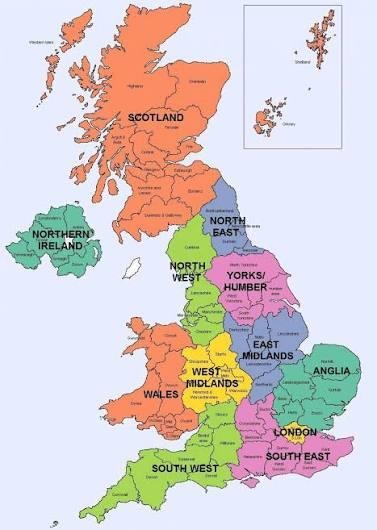
- The Westminster government has rejected immediate calls for Scottish independence and Irish reunification referendums.

Done with this article? Mark it so you can track your revision on the blog page.